
Technical SEO Service from Best SEO Expert Sumiya Fariha in Bangladesh
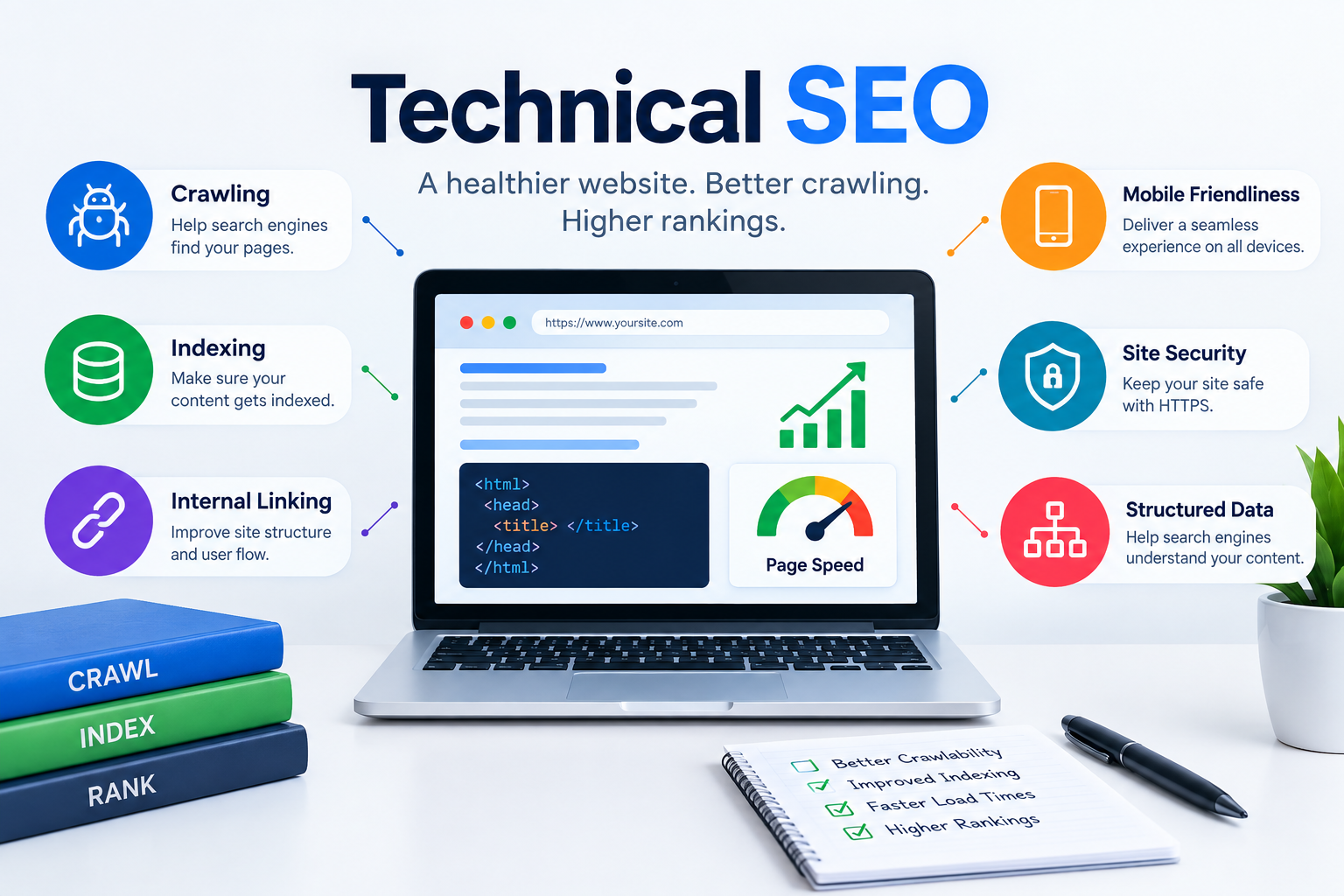
A website can look impressive without being optimized for search. You can have excellent branding, helpful content, attractive graphics, and strong products, yet still struggle to gain organic visibility if search engines cannot properly crawl, understand, or index your pages. This is why technical SEO matters. As Sumiya Fariha, an SEO expert in Bangladesh, I focus on the technical foundation behind a website so that search engines can access important pages and users can enjoy a smoother experience. Technical SEO is often compared with the foundation of a building. People may notice the paint, windows, furniture, and decoration, but none of those things can compensate for a weak foundation. A website works in much the same way. Content, backlinks, keywords, and branding all matter, but technical problems can quietly prevent those efforts from producing their full potential. Google explains that its Search systems need to crawl accessible pages, process their content, and determine which pages can be indexed and served. My approach is not about making random technical changes simply because an SEO tool displays a warning. I consider every part of the website and how they work together. I investigate crawling, indexing, page experience, redirects, canonical URLs, sitemaps, robots.txt, internal links, mobile usability, structured data, and other technical elements according to the website's actual needs. The goal is simple: create a technically healthier website that gives both search engines and visitors a clearer path through the site.
Why Technical SEO Matters for Business Growth
Technical SEO matters because search engines need to discover and understand your website before your content can compete effectively in organic search. Google describes Search as a process involving crawling, indexing, and serving results. If important pages cannot be crawled, if pages accidentally contain indexing restrictions, or if the site architecture makes important content difficult to discover, your SEO strategy can lose effectiveness before rankings are even considered.For a growing business, this becomes even more important as the website becomes larger. A small website may have only a handful of pages, while an established business can have service pages, product pages, category pages, blog posts, landing pages, media files, and multiple URL variations. Without proper technical organization, duplicate URLs, broken links, unnecessary redirects, poor internal linking, or indexing problems can gradually create confusion.Technical SEO also supports other areas of digital marketing. For example, investing in high-quality content is less useful if search engines cannot reliably access the pages containing that content. Similarly, building backlinks to URLs that redirect incorrectly or lead to poor user experiences can waste valuable authority and traffic opportunities. This is why I treat technical SEO as an ongoing part of SEO strategy rather than a one-time checklist.
How Technical SEO Supports Search Visibility
Technical SEO creates the conditions that allow your content and other SEO efforts to work properly. Google recommends making pages accessible to crawlers, using crawlable links, providing sitemaps when useful, managing duplicate URLs appropriately, and ensuring important resources can be accessed.For me, the important question is not simply, “Does this website have technical SEO?” The better question is, “Can search engines efficiently understand what this website offers, which pages matter most, and how those pages are connected?” That shift in thinking makes technical SEO much more practical.
Technical SEO Service from Best SEO Expert Sumiya Fariha in Bangladesh
My Technical SEO Service from Best SEO Expert Sumiya Fariha in Bangladesh is designed around this practical approach. I analyze the technical structure of a website, identify issues that can interfere with crawling, indexing, usability, or search understanding, and then prioritize fixes based on business impact.Instead of treating every audit warning as equally important, I focus first on issues that can genuinely affect important pages. A minor technical recommendation may be useful, but a blocked page, incorrect canonical, broken redirect chain, or serious indexation problem deserves much more attention. This prioritization helps businesses spend their time and resources where they can make the greatest difference.
What Is Technical SEO?
Technical SEO is about making sure your website is technically sound, easy for search engines to understand, and reliable for visitors to use. It is different from writing content or earning backlinks, although it supports both. Common technical SEO activities include crawl analysis, indexation checks, XML sitemap optimization, robots.txt review, canonicalization, redirect management, internal linking, mobile optimization, page performance, structured data, and HTTPS implementation.One common misunderstanding is that technical SEO means changing complicated code everywhere. That is not necessarily true. Some technical improvements involve code or server configuration, while others involve CMS settings, URL structures, content organization, or simple configuration changes. The right work depends on the website.Google's current technical requirements are relatively straightforward at the basic level: Googlebot must not be blocked, the page should work successfully, and the page needs indexable content. Meeting these minimum requirements does not guarantee indexing, but failing them can prevent a page from being eligible for normal indexing.
My Technical SEO Approach as an SEO Expert in Bangladesh
My technical SEO process begins with understanding the website and its business objectives. I do not want to fix technical issues in isolation without knowing which pages are important to the business. A service business, e-commerce store, local company, publisher, and SaaS website can have very different technical priorities.I usually begin with a technical audit and combine different sources of information, including crawling data, Search Console information where available, page-level inspection, website structure, and manual review. This helps me distinguish between genuine problems and automated tool warnings that may have little practical impact.

Technical SEO Service from Best SEO Expert Sumiya Fariha in Bangladesh
As part of my Technical SEO Service from Best SEO Expert Sumiya Fariha in Bangladesh, I focus on turning technical information into practical recommendations. A long audit report filled with hundreds of warnings is not very helpful if the website owner does not know what to fix first.My objective is to make technical SEO understandable. I explain what the problem is, why it matters, which pages are affected, and what action should be taken. When technical changes require a developer, I can also provide clear recommendations that make implementation easier.
Crawling and indexing are fundamental parts of technical SEO. Google uses automated crawlers such as Googlebot to discover pages, fetch resources, process content, and potentially add pages to its index. Google also makes clear that crawling and indexing are not guaranteed simply because a website exists online.I therefore check whether important pages can actually be discovered and accessed. I look for blocked resources, incorrect robots.txt directives, accidental noindex instructions, broken links, poor navigation paths, server errors, redirect problems, and other technical barriers.
Indexing problems can have many causes. A page might accidentally have a noindex directive, be blocked from crawling, return an error response, lack useful internal links, or be considered a duplicate of another URL. Google recommends using tools such as URL Inspection and Search Console reports to investigate these situations.My role is to investigate the reason rather than simply request indexing repeatedly. If the underlying technical problem remains, submitting a URL again does not solve the root cause.
Core Technical SEO Services I Provide
My technical SEO service covers the foundational areas that can affect how search engines interact with a website. I customize the work according to the site's size, platform, industry, and existing technical condition rather than applying exactly the same checklist to every project.
An XML sitemap gives search engines information about URLs that a site considers important. Google states that sitemaps can help with URL discovery and prioritization, particularly for large or frequently updated sites and pages that might otherwise be difficult to discover. However, a sitemap is not a guarantee that every listed URL will be indexed.During a technical SEO review, I check whether the sitemap is available, correctly configured, and useful. I look for unnecessary URLs, broken URLs, redirected URLs, duplicate variations, and pages that should not be represented as important crawl targets.A sitemap should support the website's architecture rather than simply become a list of every URL the CMS happens to generate. Quality matters more than blindly increasing the number of URLs.
The robots.txt file controls which URLs crawlers are allowed to access. It is useful for managing crawler access, but it should not be treated as a universal method for removing pages from Google's index. Google specifically explains that robots.txt is primarily a crawling control mechanism, while noindex is the appropriate mechanism when the goal is to prevent a crawlable page from being indexed.I review robots.txt carefully because a single incorrect directive can create unexpected SEO problems. At the same time, I avoid unnecessary restrictions. Blocking important CSS, JavaScript, images, or pages can interfere with Google's ability to understand and render a website correctly.
Duplicate or near-duplicate URLs are common on modern websites. Filters, parameters, tracking URLs, HTTP and HTTPS versions, trailing slash variations, category structures, and CMS-generated URLs can all create multiple versions of similar content.Canonicalization helps search engines understand which URL should represent pages that have the same or nearly the same content. Google describes redirects as a strong canonicalization signal and rel="canonical" as another strong signal, while sitemap inclusion is a weaker signal.
How I Handle Canonicalization
I do not add canonical tags simply because an SEO tool says every page should have one. I first understand the site's URL structure and duplication patterns. Then I determine whether a canonical is necessary and whether the selected canonical URL genuinely represents the preferred version.I also check for conflicting signals. For example, if the sitemap, redirects, internal links, and canonical tags point toward different URL versions, the website sends mixed messages. Consistency makes the technical architecture easier to understand.
Website performance is an important part of creating a good web experience. Slow pages can frustrate visitors, increase abandonment, and make a website feel unreliable. Technical SEO performance work can include reviewing loading behavior, large resources, image optimization, scripts, caching, server response issues, and layout stability.I do not approach speed optimization by chasing a perfect score for the sake of the score. Instead, I focus on meaningful improvements that can make the website faster and more usable. Google recommends that websites be fast, secure, accessible, and functional across devices.A technically strong website should feel responsive to real users, not simply look good inside an SEO testing tool. That distinction matters because technical SEO ultimately supports people as well as search engines.
A website may look excellent on a desktop and still provide a poor experience on smartphones. Since many users browse websites through mobile devices, mobile usability deserves serious attention during technical SEO.I check responsive layouts, navigation, buttons, text readability, image behavior, content visibility, and page interaction. I also look for mobile-specific technical problems that could prevent users from accessing important information.A good mobile experience is not just about shrinking a desktop page. It is about making the entire journey comfortable for someone using a smaller screen and potentially a slower connection.
Modern websites frequently use JavaScript for navigation, interactive features, filtering, forms, dynamic content, and application-like experiences. Google can process JavaScript, but developers still need to account for how pages are crawled, rendered, and indexed. Google's developer documentation recommends testing how Google sees pages and ensuring important content and links remain accessible.During a technical SEO review, I pay attention to pages where important content depends heavily on client-side rendering. If search engines or users cannot reliably access important information, the implementation may need improvement.This is particularly important for JavaScript-heavy websites because a page can appear complete in a browser while delivering a very different experience to a crawler under certain conditions.
Internal links are one of the simplest ways to help users and search engines navigate a website. Google explains that Googlebot discovers URLs through links, sitemaps, and redirects, and recommends making links crawlable so pages can be discovered.I review internal linking from both a usability and SEO perspective. Important pages should not be isolated without a logical reason. Service pages, category pages, supporting blog content, and other relevant resources can be connected to create a clear topical structure.Good architecture is like a well-organized library. Visitors should be able to understand where they are, what information belongs together, and where to go next. That clarity also makes it easier for search engines to understand your content.
HTTPS keeps communication between a website and its visitors encrypted and secure. Google recommends migrating sites from HTTP to HTTPS for security.As part of technical SEO, I can review HTTPS implementation, redirect behavior, mixed-content problems, certificate issues, and inconsistent HTTP/HTTPS URLs. These details may seem technical, but they influence the reliability and consistency of the website.Security should never be treated as an optional SEO decoration. A business website handles users, information, forms, transactions, or communications, so creating a secure environment is part of responsible website management.
Structured data provides explicit information about the meaning of webpage content. Google explains that structured data can help it understand pages and may make eligible content available for certain rich-result features.I consider structured data based on what the website actually represents. Depending on the business, relevant structured data may help describe organizations, products, services, articles, breadcrumbs, or other supported entities.The important point is accuracy. Structured data should represent information that is genuinely present and appropriate for the page. Adding irrelevant or misleading markup simply to chase search features is not a sustainable strategy.
Technical SEO Audits for Businesses in Bangladesh
Businesses in Bangladesh can face the same technical SEO challenges as websites anywhere else, but their priorities may vary according to industry, audience, language, hosting environment, CMS, and market. A local service business may care heavily about location-focused pages and mobile performance, while an e-commerce store may have thousands of URLs and complex filtering systems.My technical SEO audits are therefore customized. I look at the actual website rather than applying one generic checklist to every business. The audit can cover crawlability, indexability, sitemap configuration, robots.txt, redirects, canonicalization, broken links, internal linking, mobile performance, page speed, structured data, HTTPS, and other relevant technical factors.The objective is not to produce the longest audit. The objective is to identify the issues that matter most.
How I turn into SEO audit into an action plan
A technical audit becomes valuable when the findings lead to action. After identifying problems, I prioritize them according to severity, affected URLs, business importance, implementation difficulty, and potential SEO impact.For example, a page that accidentally blocks Google from crawling an important service URL deserves immediate attention. A minor HTML warning on a low-value page may not deserve the same priority. This kind of prioritization helps businesses avoid spending weeks fixing issues that have little practical importance.I also separate recommendations into understandable categories. Critical technical barriers come first, followed by high-impact improvements and then lower-priority refinements. This creates a roadmap instead of a confusing spreadsheet of warnings.
Why Choose Sumiya Fariha for Technical SEO?
I believe effective SEO should combine technical understanding with business thinking. As Sumiya Fariha, an SEO expert in Bangladesh, my approach focuses on creating practical SEO solutions rather than overwhelming clients with technical terminology.I understand that many business owners are not developers. They need someone who can explain what is happening without turning every conversation into a discussion filled with complicated jargon. That is why communication is an important part of my SEO process.I also believe technical SEO should support long-term growth. Search engines continue to evolve, websites change, businesses add new pages, and technical problems can appear after redesigns or migrations. A well-built technical foundation makes it easier to maintain and scale your website over time.
EEAT—Experience, Expertise, Authoritativeness, and Trustworthiness—is particularly important when developing a professional SEO presence. For me, EEAT means being transparent about the work, avoiding unrealistic ranking guarantees, using reliable sources, explaining technical recommendations clearly, and focusing on genuine value.Google's SEO documentation itself recommends following technical requirements and Search Essentials rather than relying on shortcuts or claims of guaranteed rankings. I use that principle when developing technical SEO strategies. Instead of promising instant results, I focus on identifying problems, improving the website's technical foundation, monitoring changes, and using evidence to guide future decisions.
Small businesses often have limited time, budgets, and technical resources. That does not mean their websites should be ignored from a technical SEO perspective. In fact, fixing a few important technical problems can sometimes make a meaningful difference because small websites may have relatively simple structures and clear business priorities.For growing brands, technical SEO also creates a foundation for future expansion. Imagine building a house without considering where additional rooms might eventually go. It may work today, but expansion becomes harder later. A clean URL structure, logical architecture, proper indexing signals, mobile usability, and reliable technical setup can make future SEO growth easier to manage.
How I Measure Technical SEO Performance
I believe SEO should be measured using evidence rather than assumptions. Depending on the project, I may monitor indexing patterns, crawl-related issues, organic visibility, technical errors, page performance, search impressions, clicks, and other relevant SEO indicators.Google Search Console is particularly useful because it provides website owners and SEO professionals with information about Google Search performance and indexing. I use performance data to understand whether technical changes are helping and to identify areas that may need further investigation.It is also important to remember that SEO changes do not always produce immediate results. Google explains that some changes can take hours to months to be reflected in Search, and recommends allowing time to assess their effects. That is why I prefer sustainable optimization over unrealistic promises of overnight rankings.
Technical SEO Service from Best SEO Expert Sumiya Fariha: My Process
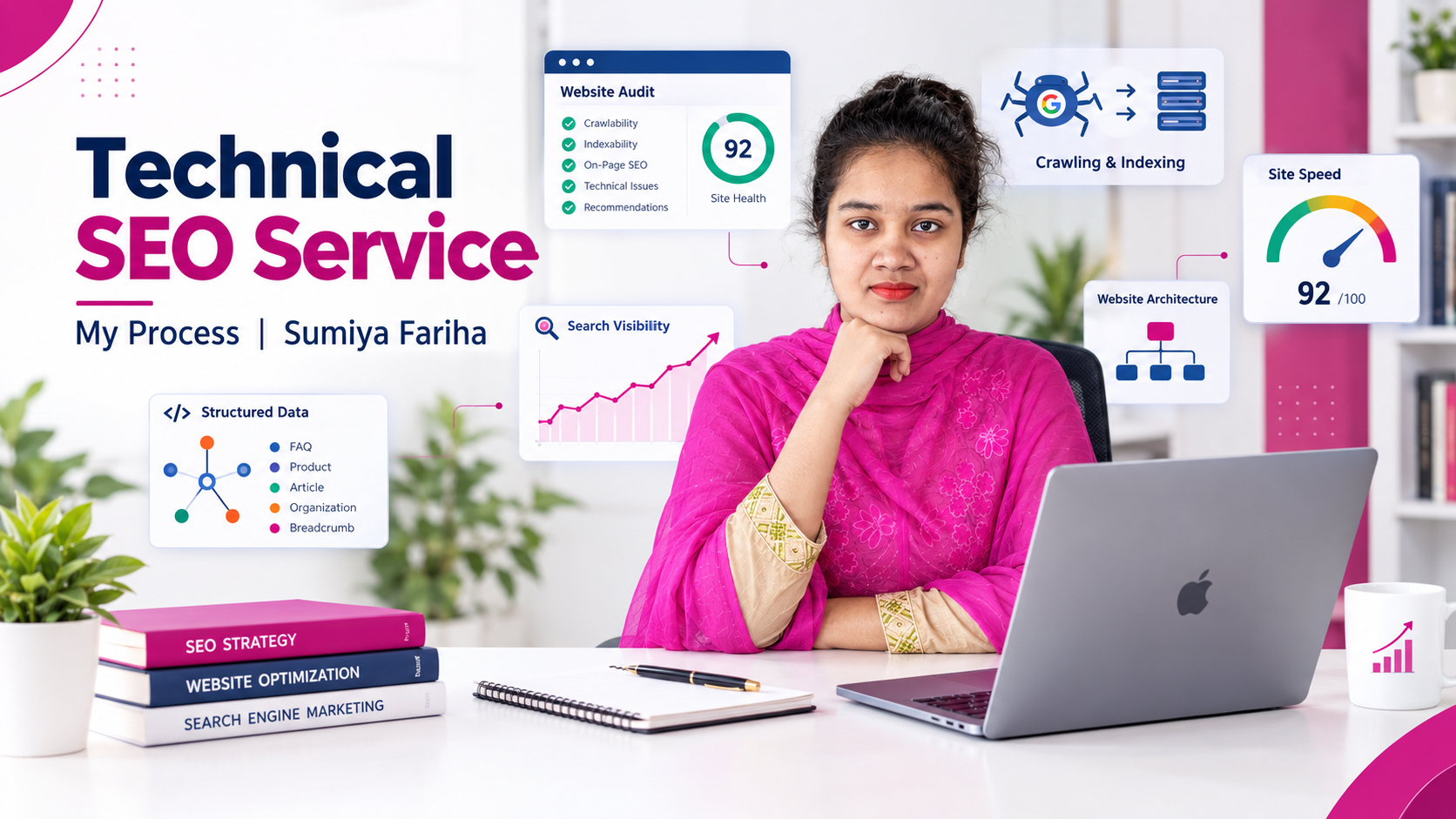
My process is designed to be straightforward. First, I understand the website, its goals, audience, platform, and current SEO condition. Next, I perform a technical review to identify important problems and opportunities. After that, I organize the findings by priority so the most meaningful issues can be addressed first.I then provide practical recommendations and, where the project scope allows, support the implementation or provide clear guidance for developers. After implementation, I believe the work should not simply stop. Technical SEO requires monitoring because websites change, plugins are updated, pages are moved, developers modify code, and new content is published. A website that is technically healthy today can develop new problems tomorrow.
One common mistake is treating technical SEO as a one-time task. Another is focusing on hundreds of minor issues while ignoring one major indexing or accessibility problem. Some website owners also use robots.txt incorrectly, rely on excessive redirects, create unnecessary URL variations, or overlook mobile performance.Another mistake is assuming that a perfect SEO audit score automatically means a website will rank well. Technical SEO is only one part of the larger SEO picture. Content relevance, search intent, authority, competition, user experience, and many other factors matter too. My approach is therefore to use technical SEO as a strong foundation while connecting it with the broader strategy of the website.
A strong website needs more than attractive pages and well-written content. It needs a technical foundation that allows search engines to access, crawl, understand, and process its important content. My technical SEO service from best SEO expert Sumiya Fariha focuses on finding those technical barriers and developing practical solutions that support long-term organic growth.From technical audits and indexing checks to Core Web Vitals, mobile optimization, XML sitemaps, robots.txt, canonicalization, internal linking, and website architecture, I approach SEO with a combination of technical attention and business-focused thinking. I do not promise shortcuts or guaranteed rankings. Instead, I focus on creating a healthier, more understandable, and more search-friendly website.If your website is receiving less organic visibility than expected, has indexing problems, loads slowly, has complicated URL structures, or simply needs a technical SEO health check, a detailed technical review can be a valuable first step.
1. What does a technical SEO service include?
A technical SEO service can include website crawling and indexing analysis, robots.txt and XML sitemap checks, canonicalization, redirects, broken links, website architecture, internal linking, mobile usability, page speed, Core Web Vitals, structured data, URL structures, and other technical elements. The exact scope depends on the website and its existing problems.
2. What Role Does Technical SEO Play in Google Rankings?
Technical SEO helps create the conditions that allow search engines to access and understand a website. Google states that pages need to meet certain technical requirements to be eligible for indexing, including being accessible to Googlebot, returning a successful status, and containing indexable content. Technical SEO provides a solid foundation, but other SEO factors also influence rankings.
3. Can technical SEO improve website speed?
Yes. A technical SEO audit can identify performance-related problems such as oversized resources, inefficient scripts, poor caching, and other factors that may contribute to slow page experiences. Google's documentation recommends using tools such as PageSpeed Insights and the Core Web Vitals report to evaluate performance.
4. How Frequently Should You Audit Your Website’s Technical SEO?
The right audit frequency varies from one website to another. A smaller, stable website may need periodic audits, while large websites, e-commerce stores, frequently updated sites, or websites undergoing redesigns may need more frequent monitoring. I recommend reviewing technical health whenever significant structural or development changes are made.
5. Why choose Sumiya Fariha for technical SEO?
I focus on practical, transparent, and business-oriented SEO. My approach combines technical analysis with website usability, content structure, search intent, and long-term organic growth. Rather than promising instant rankings, I focus on identifying real technical problems, prioritizing solutions, and building a stronger SEO foundation.